Quantum mechanics is often described as incomprehensible. Yet, this is not a confession of scientific failure, nor is it a drift into vague mysticism. It is, in fact, the most precise framework in human history. The “incomprehensibility” we feel is actually a profound mirror: it reveals that our everyday concepts—position, trajectory, and separable objects—are but a local dialect of a much vaster reality.
In the macroscopic world where we were born, we assume that things exist independently of our gaze. We believe that probability is merely a mask for our ignorance. But at the quantum level, the rules change. Through the Born Rule, we find that measurement itself is an act of participation. Through the Schrödinger equation
iℏ ∂/∂t |ψ(t)⟩ = Ĥ|ψ(t)⟩
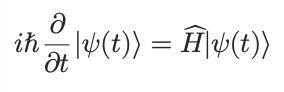
, we see a reality that evolves not in space, but in a sea of potentiality.
Bringing Quantum Magic to Reality: The Born Rule
Is the cat alive, or is it dead?
1. A Quantum World of Probabilities
In the quantum realm, particles exist in a state of ‘Superposition’—occupying multiple locations or states simultaneously. However, the moment we observe them with a camera or our eyes, they collapse into a single state before us.
So, in what form will the particle appear? The answer lies in the Born Rule, discovered by Max Born, which allows us to calculate these odds.
Heads and tails blurred
(Wave Function)
Checking the state
(Observation)
Probability of heads?
Calculate via Born Rule
2. A Remarkably Simple Formula
Quantum mechanics describes the state of a particle as a wave-like ‘wave function’. The Born Rule provides a clear answer to finding probabilities using the magnitude of this wave.
For example, areas with a large wave amplitude have a high probability of finding the particle, while calm areas have a probability near zero.
💡 In Summary
The Born Rule is a grand law that bridges the incomprehensible microscopic world (quantum) and our daily reality (observation) through the concept of ‘probability’. Thanks to this rule, scientists can calculate precise odds in a seemingly unpredictable quantum world, enabling the creation of modern semiconductors and quantum computers.
Imagine a sailor using a map of a small, calm pond to navigate the middle of the vast Pacific Ocean. The map isn’t “wrong”—it works perfectly for the pond. But as the sailor reaches the open sea, the old landmarks vanish, and the logic of the pond no longer applies.
Our intuition is that pond map. It was designed for a world of solid chairs, fixed paths, and predictable clocks. When we sail into the microscopic realm, we find that the “landmarks” are made of waves and the “paths” exist in multiple places at once. We aren’t lost; we have simply reached the edge of our familiar map. Humility, then, is the courage to admit that the territory is much larger than our drawings of it. This is the great humbling of the human ego.
We have learned the rules, yet we cannot find a “conceptually satisfying picture” that fits our old assumptions. We find that the order of our actions matters because the universe itself does not always commute
ÂB̂ ≠ B̂Â
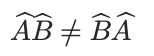
Our ordinary language was formed in the shadows of the large; it falters in the presence of the small.
To study the quantum is to stand at a threshold where logic meets its limit and wonder begins. It is the realization that the fabric of the universe is governed by a logic that is not our own. We do not master this reality; we are merely guests in its magnificent silence.